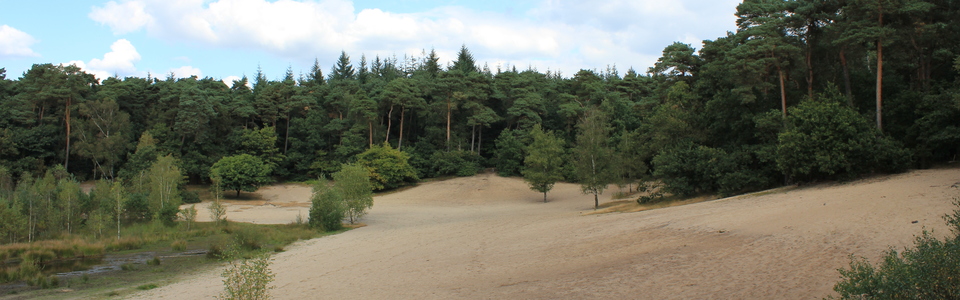
This autumn school will take place during the week 14-18 September 2026 in a conference center close to Utrecht, The Netherlands.
Aims and Scope
The idea of this autumn school is to bring together a group of about 25 participants in a remote place in order to learn about advanced topics in Algebraic Topology. The talks are meant to be accessible to first or second year PhD students.
Program
| Monday | Tuesday | Wednesday | Thursday | Friday | ||
|---|---|---|---|---|---|---|
| 09:30-09:45 | Registration | |||||
| 09:45-10:45 | Morris | 09:30-10:45 | Merling 1 | Krannich 2 | Merling 3 | Krannich 4 |
| 11:15-12:15 | Carvalho de Oliveira | 11:15-12:30 | Krannich 1 | Merling 2 | Krannich 3 | Merling 4 |
| 12:30 - 14:00 | Lunch | Lunch | Lunch | Lunch | Lunch | |
| 14:00-15:00 | Pavlova | Zhu | Excursion | Abramyan | End | |
| Śmietaniak | Gotliboym | |||||
| 15:15-16:15 | Osorio | 15:15-15:45 | Questions | Questions | ||
| 16:45-17:45 | Henn | 16:15-17:45 | Gongshow | Gongshow | ||
| 18:30 | Dinner | Dinner | Dinner | Dinner |
Lecture series
The following lecture series constitute the core program of the autumn school:
- Manuel Krannich: Embedding calculus from a higher-categorical perspective
Abstract Since its introduction by Goodwillie and Weiss, embedding calculus has grown into an indispensable homotopy-theoretic tool in the study of spaces of embeddings and diffeomorphisms of manifolds. Roughly, it approximates a manifold \(M\) by the homotopy type of the diagram of configuration spaces of framed points in \(M\) together with the natural point-forgetting and -splitting maps between them, and it approximates an embedding between manifolds by the induced derived map between these diagrams of configuration spaces.
In these lectures, I will give an introduction to embedding calculus and its applications from the perspective of higher category theory, in particular the theory of infinity-operads.
- Mona Merling: Equivariant algebraic \(K\)-theory and \(G\)-manifolds
Abstract Algebraic \(K\)-theory of smooth compact manifolds provides a homotopical lift of the classical \(h\)-cobordism theorem and serves as a critical link in the chain of homotopy theoretic constructions that show up in the classification of manifolds and their diffeomorphisms. This was the motivation behind Waldhausen's development of \(K\)-theory of ring spectra. The equivariant story for \(G\)-manifolds is far less understood. In this lecture series, I will first give an overview of the classical story. Then, I will give an overview of equivariant stable homotopy theory, and describe some recent progress on an equivariant homotopical lift of the \(h\)-cobordism theorem.
Preparatory talks
- Riley Morris: The language of \(\infty\)-categories (60 minutes)
- Bianca Carvalho de Oliveira: Whitehead torsion and the \(s\)-cobordism theorem (60 minutes)
- Daria Pavlova: Basics of \(\infty\)-operads (60 minutes)
- Joel Osorio: Spectra and stable homotopy theory (60 minutes)
- Nina Henn: Construction of Waldhausen’s K-theory via the \(S_\bullet\)-construction (60 minutes)
More details about the preparatory talks including references are listed here.
Contributed talks
- Qi Zhu: Multiplication on \(BPR\) and \(BPR\langle n\rangle\)
Abstract
A guiding question in the area of structured ring spectra lies in identifying multiplicative structures on the Brown-Peterson spectrum \(BP\) and its truncated variants \(BP\langle n\rangle\). Its \(C_2\)-equivariant analog concerns the Real Brown-Peterson spectrum \(BPR\) and its truncated variants \(BPR\langle n\rangle\). These play a similar role in the theory of structured equivariant ring spectra, with applications, for instance, to Hermitian \(K\)-theory. The aim of this talk is to survey the current state of the art in this story.
This is based on joint work with Ryan Quinn, as well as with Carrick, Hill, Quinn, and Stewart.
- Kamil Śmietaniak: Constructing One-Fixed-Point Actions on Spheres
Abstract
A smooth action of a finite group \(G\) on a sphere is called a one-fixed-point action if the whole group fixes exactly one point. I will begin by recalling the class of finite groups for which such actions may exist, following Oliver's characterization of groups admitting fixed-point-free actions on disks. The main part of the talk will concern the construction of smooth one-fixed-point actions on spheres. The basic idea is to start with a suitable real representation of the group, which describes the action near the unique fixed point, and then extend this local picture to an action on the whole sphere. Equivariant surgery is used to modify the resulting manifold until it has the desired global structure. I will focus on the geometric ideas behind this construction and explain how the difficulties arising during the surgery process can be removed.
This approach allows us to construct one-fixed-point actions in many dimensions for a given group. Finally, I will explain how such constructions can be transferred from a group \(G\) to a suitable extension of \(G\) by a normal subgroup \(N\), $$1 → N → G' → G → 1.$$
Under appropriate assumptions on \(N\) and the extension, a construction for \(G\) can be used to produce a one-fixed-point action for \(G'\), after adding a suitable free \(G'\)-representation. In this way, information about one-fixed-point actions for \(G\) can be transferred to \(G'\), with a controlled change in dimension. Examples include \(\mathrm{SL}(2,5)\), \(\mathrm{TL}(2,5)\), and certain cyclic extensions of \(A_5\).
- Semyon Abramyan: Embedding calculus for parallelized manifolds
Abstract
We study a variant of the embedding functor \(\mathrm{Emb}(M, N)\) that incorporates homotopical data from the frame bundle of the target manifold \(N\). Given a parallelized \(m\)-manifold \(M\) and an \(n\)-manifold \(N\) equipped with a section of its \(m\)-frame bundle, we define a modified embedding functor \(\widetilde {\mathrm{Emb}}(M, N)\) that interpolates between the standard embedding and a reference framing. Using the manifold calculus of functors, we identify the Taylor tower of \(\widetilde{\mathrm{Emb}}(M, N)\) with a mapping space of right modules over the Fulton–MacPherson operad. We prove a convergence theorem under a codimension condition, establishing a weak equivalence between \(\widetilde{\mathrm{Emb}}(M, N)\) and its Taylor approximation. Finally, under rationalization, we describe the derived mapping space in terms of a combinatorial hairy graph complex, enabling computational access to the rational homotopy type of the space of embeddings.
- Marc Gotliboym: Trace Methods for Equivariant Algebraic \(K\)-Theory
Abstract
Trace methods are an approach to computing algebraic \(K\)-theory which has been successful in recent decades. It compares algebraic \(K\)-theory to invariants which are easier to compute, such as topological Hochschild homology (\(\mathrm{THH}\)) and topological cyclic homology (\(\mathrm{TC}\)). We will introduce trace methods and discuss an equivariant version of \(\mathrm{THH}\), along with its circle action, which allows us to define an equivariant notion of \(\mathrm{TC}\). These equivariant invariants are expected to aid in computing equivariant algebraic \(K\)-theory.
Registration
The registration deadline has passed, and registration is no longer possible.
We will be able to offer lodging and meals to accepted participants, but we cannot cover any travel expenses.
Travel Information
The autumn school starts Monday 14 September in the morning and ends Friday 18 September around noon, so it is recommended that you arrive already on Sunday 13 September. Travel details will be given in due time before the autumn school.
Organizers
The autumn school is organized by Gijs Heuts, Magdalena Kędziorek, Inbar Klang, and Steffen Sagave. It is an activity of the collaborative research grant Symmetry on the interface of topology and higher algebra that is funded by the Dutch Research Council (NWO) and has the above organizers as well as Renee Hoekzema and Lennart Meier as principal investigators.